

PRAGUE, CZECH REPUBLIC — International Telecommunication Union Secretary General Houlin Zhao today called for more cooperation between his organisation and other standardisation bodies, including the Internet Engineering Task Force (IETF).
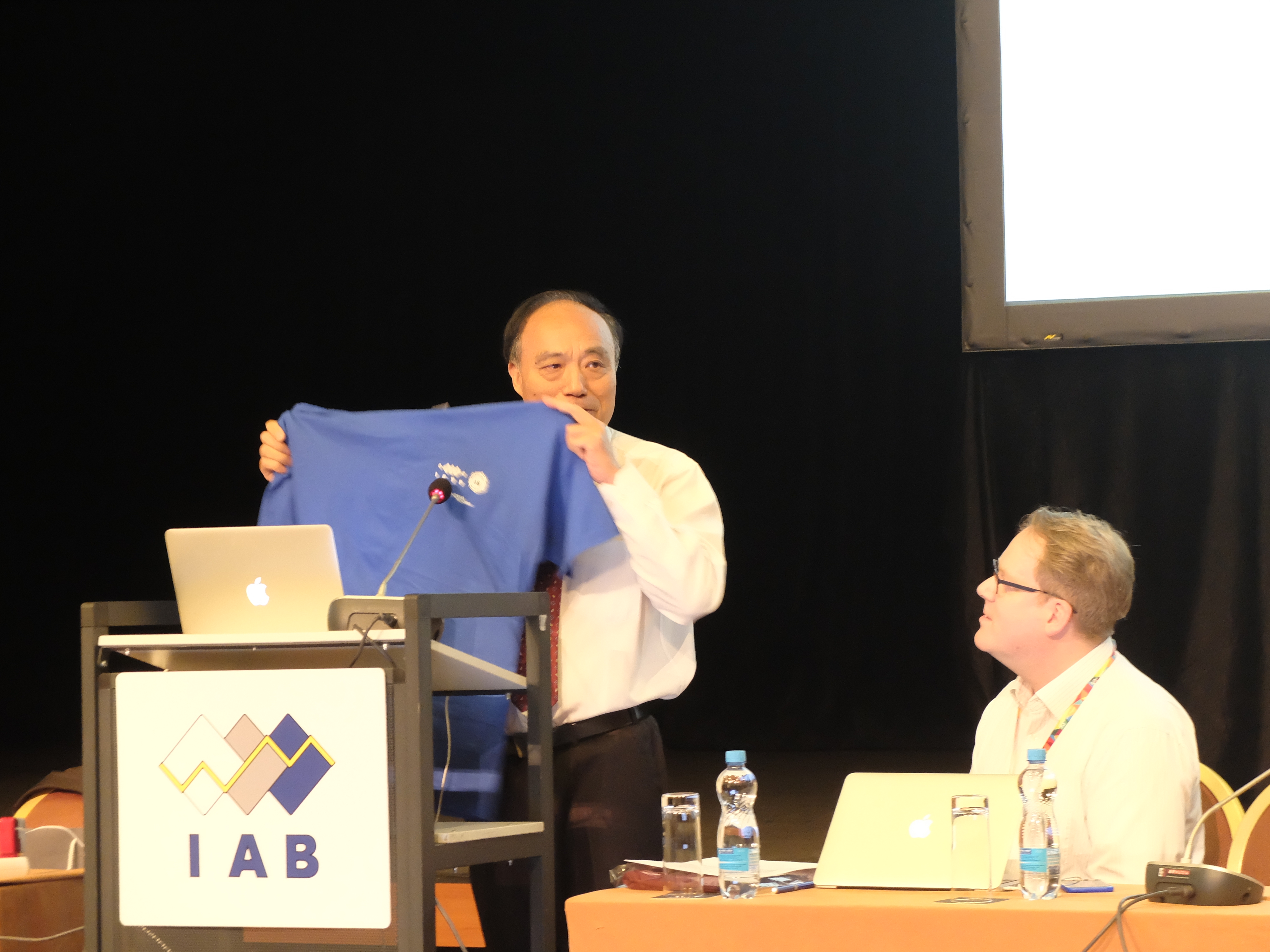
Speaking at the IETF 93 meeting in Prague today, Zhao acknowledged the different environments and cultures between the intergovernmental and industry self-regulatory models.
“Some here might see the ITU as a kind of top-down. And the IETF is bottom-up,“ he said while donning an IETF t-shirt over his tie in order to “adapt”. Yet “whether top-down or bottom up, we both serve the market,” Zhao beamed.
The IETF is the major standardisation body for internet protocol (IP) related standards, a technology that was in its early days rejected by the ITU only to be embraced later.
The original rivalry has faded, only to erupt from time to time when both organisations claim change-control over important standards, as happened four years ago with the Multiprotocol Label Switching (MPLS) protocol, used for speeding up and shaping network traffic flows.
There also have been discussions for years about the ITU becoming an IPv6 registry alongside the self-regulatory regional internet registries (RIRs), a plan that was heavily opposed by many in the technical community.
Zhao said at the IETF meeting that the standardisation bodies are at times competitive. “But we should not fight for our own sides,” he said.
Meanwhile, standardisation of classical telephony technology, ITU’s main area of expertise, has been superseded by internet protocol, the World Wide Web, and mobile development, which are all standardised elsewhere.
Zhao said the IETF and ITU are already cooperating in many areas and potential areas for more cooperation could be car-to-car connection, the internet of things and security.
At the same time, he called on the engineers to consider how best to connect those still without internet access.
The IETF meets through Friday this week to discuss protocols, crypto standards and also human rights questions in the standardisation work.