

As the United Nations celebrated Women Day on 8 March, the World Intellectual Property Organization had an ongoing initiative to encourage women’s participation in a WIPO social media platform on technology and innovation.
Kaori Saito, gender and diversity specialist in the WIPO Human Resources Management Department, and Tomasz Liharewski, program officer, WIPO Global Infrastructure Sector, sat down this week with Intellectual Property Watch’s Catherine Saez to describe what the initiative was about and its outcome.
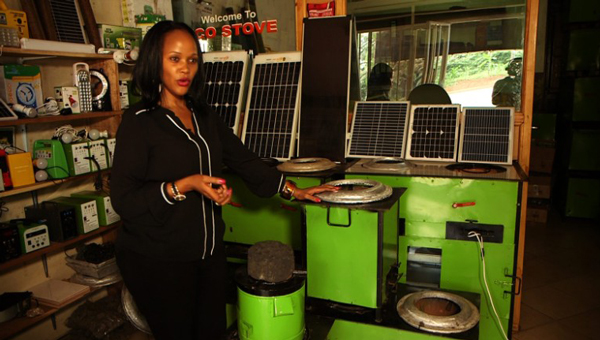
The “Women in IP” initiative is part of the WIPO Technology and Innovation Support Center (TISC) program. According to WIPO, it “provides innovators in developing countries with access to locally based, high quality technology information and related services, helping them to exploit their innovative potential and to create, protect, and manage their intellectual property (IP) rights.”
The TISC program has a social medial tool, called eTISC, under which the “Women in IP” initiative was launched on 18 February. The following is a Q&A with the officials.
Intellectual Property Watch (IPW): What is eTISC?
Tomasz Liharewski (TL): The eTISC was launched in November 2012. It was created to support the TISC programme, which used to be a WIPO Development Agenda programme and is now mainstreamed into WIPO activities. Basically the eTISC is like a “Facebook” for the TISC programme, and at the same time promotes the work of WIPO, as a global hub of intellectual property.
The eTISC platform brings people together from different countries, regions and continents, and also from different horizons, such as small and medium enterprises, the academia, research centres, and national intellectual property offices where TISC projects have been launched. The platform is open to any country and is meant to facilitate the exchange of information, ideas and expertise on IP. Exchanges are particularly active at the university and private sector level.
Also provided in eTISC is an expert chat where WIPO invites experts from all over the world to make presentations on IP issues, but also technology transfer. Those experts come mainly from the academia and the private sector. To date, 13 experts have provided a presentation on eTISC and have answered questions from the community. There is almost a 50/50 gender parity in the experts, with 6 women, which is something that we can be proud of. Since the launch of eTISC, 1253 members have joined and about 36 percent are women.
IPW: What is the purpose of the Woman and IP campaign?
Kaori Saito (KS): Starting from the big picture, WIPO is part of the UN system and as a UN entity specialised in the field of IP, WIPO is promoting gender equality and women’s empowerment within its mandate. The UN has a system-wide action plan on gender equality and the empowerment of women, for which each entity reports on and WIPO is part of this framework of the UN system.
We had the first WIPO Policy on Gender Equality issued in Aug 2014. The policy has two objectives: one to mainstream gender equality in the substantive work of WIPO, and the other is to increase gender equality within the organisation, thus gender balance at all levels, and having a work place conducive to gender equality.
Following WIPO’s mission to promote a balanced and efficient IP system that provides benefits to all, women and men, we wanted to see how eTISC could actually provide some of those benefits.
The campaign includes blog posts, the launch of a “Women in IP” group, and an eTISC quiz. Members were also asked to submit a profile of women innovators from their country, and we had quite an astonishing response, with about 25 profiles. They came from a variety of countries, from Russia to Chile and from Madagascar to Sri Lanka.
IPW: What is the outcome of the campaign?
KS: The first of outcome was a nine percent increase in the eTISC women membership since the beginning of the campaign.
TL: The other outcome is that, among all the excellent profiles that we received, nine women were featured on WIPO public website.
[The 9 women inventors featured were: Yeny Carolina Carías from Honduras, who created a software adapted for teaching hearing-impaired students; Sister Claudine Aimee Rasolohery of Madagascar, who developed an award-winning plant-based treatments for high blood pressure; Nilwala Kottegoda of Sri Lanka, for her nanotechnology research on the slow release of agricultural fertilizers; Rose Twine of Uganda, who created the solar power-driven EcoStove; Victoria Alonso Perez of Uruguay, who developed a system for early detection of fever in cattle; Marina Myagkova of Russia, who won an award for her patented drug screening technology; Ximena Munoz Abogabir of Chile, who filed an international patent application for a lighting system, Carmen Cecilia Carreño Suazo of Chile, for a green technology crushing device for glass bottles; and Guizani Ikram of Tunisia, who filed a patent application relating to methods for diagnosing Leishmaniasis.]
[Note: The officials underlined the fact that there was no selection process of profiles received, but the choice of featured ones related to technicalities]
IPW: What are the next steps?
KS: When the campaign is over, it might become a more long-term effort now that more women are participating in eTISC. We want them to engage in the conversation and benefit from eTISC.
TL: Anybody can register and access the “Women in IP” blog on eTISC. The “Women in IP” campaign might become a permanent feature for the future because if you repeat something over a long period of time it finally gets to the people how important this issue is. If you look at inventions made by women it is really amazing!
KS: The group also received two questions from male eTISC members from Bangladesh and Middle East on tools to promote women in IP.
IPW: What would you say is the main issue for women in IP?
KS: Women still use IP at a much lower rate than men. The percentage of women who patent is even lower than the percentage of women in science. A number of factors play a role in this imbalance between men and women in IP. Education is one of them but not the whole story.
TL: 118 women on eTISC are coming from universities, which is a huge number, and as [WIPO] Director General Francis Gurry put it already in an interview, the academia’s buy-in to the TISC program has been tremendous. There are also women from 44 research centres and 49 private sector companies. By the end of January, we had a total of 300 representatives from universities. That makes almost a 50/50 gender representation, which is important to bear in mind.
We want to bring theses university representatives together and in the context of the women in IP campaign, we want to bring women together. Many of the nominations were coming from women but also from men, which is noteworthy and shows that there is awareness about the issue.
IPW: Thank you.
Image Credits: Flickr – Sean Dreilinger, WIPO
The presentation is impressive and may serve as a wake-up call for women with the latent capacity to IP creation to join eTISC. eTISC Community members should welcome these women with warm embrace.
This is a fabulous initiative and Kudos to WIPO for the efforts. It will be useful to have an audit of research programmes particularly in developing countries where women scientists have been deploying time and other resources for generation of IP, but do not know the true potential of IP as an instrument for progress in the techno economic space.
Would like to get involved.
DrM?zd.Nair