Original news and analysis on international IP policy
UN Human Rights Council Debates Report Criticising Copyright
Copyright might run counter to human rights, says a new report from the United Nations Special Rapporteur in the field of cultural rights. In the report, she provides a number of recommendations, including encouraging UN World Intellectual Property Organization members to support the adoption of international instruments on limitations and exceptions to copyright. The report is under consideration by the Human Rights Council and was debated extensively today.
Copyright might run counter to human rights, says a new report from the United Nations Special Rapporteur in the field of cultural rights. In the report, she provided a number of recommendations, including encouraging UN World Intellectual Property Organization members to support the adoption of international instruments on limitations and exceptions to copyright. The report is under consideration by the Human Rights Council and was debated extensively today.
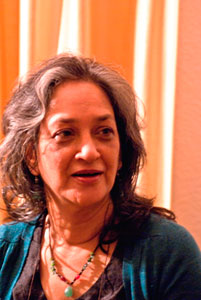
Farida Shaheed presented her report on copyright policy and the right to science and culture on 11 March, at the 28th session of the Human Rights Council, taking place in Geneva from 2-27 March.
The report is the first of two consecutive studies by Shaheed on IP policy as it relates to the right to science and culture. The current report focuses on the interface of copyright policy. The second report is expected to be submitted to the UN General Assembly in 2015, and will look at the connection between the right to science and culture and patent policy, according to Shaheed.
[Update:] Most of the oral statements made during the presentation of the Special Rapporteur can be found on the OHCHR website (requires registration).
Copyright Lacks Human Rights Dimension, Report Says
“Copyright laws prohibit much more than literal copying,” Shaheed said in her presentation [pdf]. “They generally also render illegal translating, publicly performing, distributing, adapting or modifying a copyrighted work without permission or licence from the copyright holder,” she said. And, she added, copyright holders may not be the original authors.
Shaheed said a “widely shared concern stems from the tendency for copyright protection to be strengthened with little consideration to human rights issues.” This is illustrated by trade negotiations conducted in secrecy, and with the participation of corporate entities, she said.
She stressed the fact that one of the key points of her report is that intellectual property rights are not human rights. “This equation is false and misleading,” she said.
The report also suggests that authors must be distinguished from copyright holders, she said, adding, “We should always keep in mind that copyright regimes may under-protect authors because producers/publishers/distributors and other ‘subsequent right-holders’ typically exercise more influence over law-making.”
Shaheed said that exceptions and limitations to copyright “should be developed to ensure the conditions for everyone to enjoy their right to take part in cultural life by permitting legitimate educational usages, expanding spaces for non-commercial culture and making works accessible for persons with disabilities or speakers of non-dominant languages.”
She described the main challenge as being related to international copyright treaties making copyright protection mandatory, while treating exceptions and limitations as optional.
As a recommendation to address this issue, she advised in the report to “explore the possibility of establishing a core list of minimum required exceptions and limitations incorporating those currently recognized by most States, and/or an international fair use provision.”
The report gives recommendations on a number of issues, such as ensuring transparency and public participation in law-making, ensuring the compatibility of copyright laws with human rights, and the protection of the moral and material interests of authors.
Furthermore, the report advises WIPO members to support the adoption of international instruments on copyright exceptions and limitations for libraries and education. It also suggests that the World Trade Organization “should preserve the exemption of least developed countries from complying with provisions of the TRIPS Agreement [Trade-Related Aspects of Intellectual Property Rights at WTO] until they reach a stage of development where they no longer qualify as least developed countries.” This was requested by LDCs when the last extension was discussed at the WTO in 2013, but refused by some developed countries (IPW, WTO/TRIPS, 12 June 2013).
Developing Countries See Concern Over Rights Inhibiting Access
Reactions to the special rapporteur’s report were an echo of discussions taking place at the WIPO Standing Committee on Copyright and Related Rights (SCCR) where delegates are trying to agree on exceptions and limitations to copyright for libraries, education, and people with other disabilities than visual impairment (IPW, WIPO, 14 December 2014).
A number of developing countries supported the conclusions of the report, such as Ecuador on behalf of the Community of Latin American and Caribbean States, Egypt, Iran, Venezuela, and Algeria, which said in its statement that impact studies should be carried out on national policies and international instruments relating to copyrights to see how they impact human rights. Access to education, Algeria said, should be taken into account in the discussion on exceptions and limitations to copyright.
Several countries, such as Indonesia and Brazil, commented on the issue of the protection of local and indigenous communities, which is mentioned in the report, for which they said “intellectual property historically failed” to take into account the issues of indigenous peoples.
Some developing countries said the current copyright system hinders the right to development by a violation of the right to education, health and progress and many other rights related to affording a basic decent life to millions in developing countries, according to UN sources.
Countries considered that an appropriate balance between the legitimate aspiration to participate in cultural life and the protection of authorship and copyright is crucial to guarantee the diffusion of knowledge and the development of creativity, the sources said.
Developed Countries Defend Copyright System
The United States said in its statement that copyright laws in the US and other countries “foster and promote culture, science, and the arts, for the benefit not only of their creators, but also the general public.”
The report, the US found, “does not adequately acknowledge that copyright can serve as a means to promote human rights.” The report, it said, should have “more fully addressed the pressing challenges posed to creators by lack of respect of intellectual property rights and for all individuals’ human rights to freedom of expression.”
The US said it disagrees with the report, in particular the recommendation related to copyright norm-setting activities at experts’ discussion in other international fora. They also disagreed on the suggestion that individucal creators and corporations or businesses should merit different protections.
Portugal said the current copyright framework constitutes an important tool for human development, especially for cultural and scientific advancement. The current framework provides “ample flexibility to devise, adopt and implement meaningful exceptions and limitations that take into account both the interests of copyright holders and users…..,” said the delegate, adding that no new legally binding instruments in this field are needed.
The European Union said it was surprised that the report had not taken into account “many comments” from member states and relevant stakeholders, which it said would have ensured a more balanced outcome.
“Copyright is fundamental to creation, and as such plays an essential role in human development. It provides the necessary reward and incentive for those that stand at the heart of the creative process, advancing the sum of human understanding to the benefit of all,” the EU delegate said in his statement [pdf]. France concurred.
Japan said that the ongoing discussions at WIPO on copyright exceptions and limitations should not be prejudiced.
Special Rapporteur Answers Concerns
Shaheed, who will be leaving office after 6 years of tenure and was the first special rapporteur in the field of cultural rights, fended off remarks and explained that her work was not to summarise the views that were submitted to her. Her work, she said, was driven by human rights concerns, not merely reflecting the perspective of the cultural industry.
A number of states today insisted on the need for balance, she said. To countries suggesting that the Human Rights Council was not the appropriate forum to discuss copyright policies, she said moral material interests are enshrined in international human rights instruments and thus should be looked into from the human rights perspective.
She said she cannot agree that copyright is the only privileged driver of creativity and innovation. “I don’t think anyone really believes it was always the case,” she said. “Imagine how impoverished we would be if we had had no copyright and thus had had no contributions” from artists such as Rembrandt, whose work was not copyrighted but still contributed to art, culture and thinking, she said.
“Not everything can be judged by monetised considerations,” she added.
Shaheed also disagreed with the suggestion that individual creators and corporations or businesses do not merit different protection. From the human rights perspective, “they absolutely do,” she insisted. Corporations and businesses are not human beings and as such cannot enjoy human rights, she said.
“What we need is a balance and a discussion on how to go forward and ensure that everyone’s rights are protected adequately,” she said.
Copyright at it stands does protect the rights of a number of artists but not sufficiently the rights of all artists and in some ways prevents access of the public to creative work, she said.
She said she engaged with both WIPO and UNESCO in the course of her mandate and hoped that her report will spark discussions at WIPO and introduce a human rights approach into those discussions.
Publishers Question Objectivity of Report
Jens Bammel, secretary general of the International Publishers Association, said in his statement that “rapporteurs are required to be unbiased and objective.”
“The rapporteur intends to defend the rights of authors against their publishers,” he said, hinting at the fact that the submission of the International Authors Forum and its response to the report had not been correctly reflected in the report.
“IPA values this report as a unique perspective, a singular contribution to a broader, more objective, fact-based and fair analysis of how the international copyright framework is currently balancing the human rights of creators with those of consumers.” He suggested a “more inclusive dialogue” on the subject, “preferably at WIPO.”
In addition to the publishers, it’s important to note the response of the international library and archive community to the report: http://www.ifla.org/node/9455
[…] IP Watch – UN Human Rights Council Debates Report Criticising Copyright […]
[…] The UN Special Rapporteur in the field of cultural rights, Farida Shaheed, has just delivered a less-than-complimentary report on copyright to the UN’s Human Rights Council. Shaheed’s report actually examines where copyright meshes with arts and science — the two areas it’s supposed to support — and finds it runs contrary to the rosy image of incentivized creation perpetuated by the MPAAs and R…. […]
[…] copyright meshes with arts and science — the two areas it’s supposed to support — and finds it runs contrary to the rosy image of incentivized creation perpetuated by the MPAAs and R…. Shaheed said a “widely shared concern stems from the tendency for copyright protection to […]
[…] copyright meshes with arts and science — the two areas it’s supposed to support — and finds it runs contrary to the rosy image of incentivized creation perpetuated by the MPAAs and R…. Shaheed said a “widely shared concern stems from the tendency for copyright protection to […]
[…] first report, Copyright Policy and the Right to Science and Culture, was filed with the UN Human Rights Council in December. In March, UN member states had their say on the copyright […]
[…] The Council also approved a resolution (A/HRC/28/L.15), renewing the mandate of the Special Rapporteur in the field of cultural rights for 3 years and took note of the current rapporteur’s recent report raising concerns about the impact of copyright on human rights (IPW, United Nations, 11 March 2015). […]
[…] “UN Human Rights Council Debates Report Criticising Copyright”, Intellectual Property Watch, 11/03/2015 […]
[…] report of Farida Shaheed, the United Nations Special Rapporteur in the field of Cultural Rights (IPW, Access to Knowledge, 11 March 2015). Her report was presented on 11 March at the 28th session of the Human Rights Council. Shaheed […]
[…] … Farida Shaheed, has just delivered a less-than-complimentary report on copyright to the UN’s Human Rights Council. Shaheed’s report actually examines where copyright meshes with arts and science — the two areas it’s supposed to support — and finds it runs contrary to the rosy image of incentivized creation perpetuated by the MPAAs and R…. […]
[…] ENSZ jelentés a szerzői jog és az emberi jogok kapcsolatáról – A napokban olvastam az Intellectual Property Watch oldalán arról a jelentésről, melynek szerzője, Farida Shaheed, élesen kritizálta a szerzői jogi szabályokat azok emberi jogokkal ellentétes tartalmuk miatt. Én személy szerint sosem állítottam, hogy a szerzői jog tökéletes lenne, mint ahogy elvetem annak a gondolatát is, hogy a szerzői jogot fel kellene számolni. A fenti linkről elérhető írásból azonban úgy látom, hogy Shaheed sem szükségképpen érti, hogy a szerzői jog pontosan mi végre van. Egyes megállapításai talán helytállóak is lehetnének, így például én sem rajongok érte, hogy a nemzetközi szerződéseket titokban tárgyalják meg, ugyanakkor világosan látható, hogy ez nem csak a szerzői jog területén működik így, és összességében ebben a nemzetközi tárgyalások világában semmi meglepő sincs. Ugyanakkor több olyan kijelentést is tesz, amelyek mellőzik a létalapot, illetve a megfelelő tudományos előkészítést. Így élesen kritizálja Shaheed, miszerint a szerzői jogok kötelező jelleggel kerülnek meghatározásra, a korlátozások és kivételek viszont csak opcionális jelleggel. Erre is tekintettel Shaheed azt javasolja, hogy kerüljenek a korlátozások és kivételek is kötelezően meghatározásra, akár egy fair use teszt formájában is. Jelzem: nem korrekt az észrevétele. Összességében nem egy korlátozás és kivétel gyökerezik kötelező nemzetközi előírásokból (pl. idézés, magáncélú többszörözés, ideiglenes többszörözés). Nem folytatom e helyütt, de egy olvasást megér a fenti linkről elérhető anyag. […]



In addition to the publishers, it’s important to note the response of the international library and archive community to the report: http://www.ifla.org/node/9455
[…] Source: http://www.ip-watch.org […]
[…] IP Watch – UN Human Rights Council Debates Report Criticising Copyright […]
[…] The UN Special Rapporteur in the field of cultural rights, Farida Shaheed, has just delivered a less-than-complimentary report on copyright to the UN’s Human Rights Council. Shaheed’s report actually examines where copyright meshes with arts and science — the two areas it’s supposed to support — and finds it runs contrary to the rosy image of incentivized creation perpetuated by the MPAAs and R…. […]
[…] copyright meshes with arts and science — the two areas it’s supposed to support — and finds it runs contrary to the rosy image of incentivized creation perpetuated by the MPAAs and R…. Shaheed said a “widely shared concern stems from the tendency for copyright protection to […]
[…] copyright meshes with arts and science — the two areas it’s supposed to support — and finds it runs contrary to the rosy image of incentivized creation perpetuated by the MPAAs and R…. Shaheed said a “widely shared concern stems from the tendency for copyright protection to […]
The full response of the International Authors Forum to the Report is available here: http://internationalauthors.org/wp-content/uploads/IAF-Response-to-Human-Rights-Consultation-10-March-2015.pdf
[…] first report, Copyright Policy and the Right to Science and Culture, was filed with the UN Human Rights Council in December. In March, UN member states had their say on the copyright […]
[…] The Council also approved a resolution (A/HRC/28/L.15), renewing the mandate of the Special Rapporteur in the field of cultural rights for 3 years and took note of the current rapporteur’s recent report raising concerns about the impact of copyright on human rights (IPW, United Nations, 11 March 2015). […]
[…] “UN Human Rights Council Debates Report Criticising Copyright”, Intellectual Property Watch, 11/03/2015 […]
[…] report of Farida Shaheed, the United Nations Special Rapporteur in the field of Cultural Rights (IPW, Access to Knowledge, 11 March 2015). Her report was presented on 11 March at the 28th session of the Human Rights Council. Shaheed […]
[…] … Farida Shaheed, has just delivered a less-than-complimentary report on copyright to the UN’s Human Rights Council. Shaheed’s report actually examines where copyright meshes with arts and science — the two areas it’s supposed to support — and finds it runs contrary to the rosy image of incentivized creation perpetuated by the MPAAs and R…. […]
[…] ENSZ jelentés a szerzői jog és az emberi jogok kapcsolatáról – A napokban olvastam az Intellectual Property Watch oldalán arról a jelentésről, melynek szerzője, Farida Shaheed, élesen kritizálta a szerzői jogi szabályokat azok emberi jogokkal ellentétes tartalmuk miatt. Én személy szerint sosem állítottam, hogy a szerzői jog tökéletes lenne, mint ahogy elvetem annak a gondolatát is, hogy a szerzői jogot fel kellene számolni. A fenti linkről elérhető írásból azonban úgy látom, hogy Shaheed sem szükségképpen érti, hogy a szerzői jog pontosan mi végre van. Egyes megállapításai talán helytállóak is lehetnének, így például én sem rajongok érte, hogy a nemzetközi szerződéseket titokban tárgyalják meg, ugyanakkor világosan látható, hogy ez nem csak a szerzői jog területén működik így, és összességében ebben a nemzetközi tárgyalások világában semmi meglepő sincs. Ugyanakkor több olyan kijelentést is tesz, amelyek mellőzik a létalapot, illetve a megfelelő tudományos előkészítést. Így élesen kritizálja Shaheed, miszerint a szerzői jogok kötelező jelleggel kerülnek meghatározásra, a korlátozások és kivételek viszont csak opcionális jelleggel. Erre is tekintettel Shaheed azt javasolja, hogy kerüljenek a korlátozások és kivételek is kötelezően meghatározásra, akár egy fair use teszt formájában is. Jelzem: nem korrekt az észrevétele. Összességében nem egy korlátozás és kivétel gyökerezik kötelező nemzetközi előírásokból (pl. idézés, magáncélú többszörözés, ideiglenes többszörözés). Nem folytatom e helyütt, de egy olvasást megér a fenti linkről elérhető anyag. […]