

By Teresa Hackett, eIFL
Reposted from the eIFL blog.
“Copyright divide in numbers”, the graph on the first page of the newly launched ‘The Copyright Manifesto. How the European Union should Support Innovation and Creativity through Copyright Reform’ tells a story. In an illustration of the results of the European Union’s (EU) 2014 consultation on copyright, publishers, authors and collective management organizations express strong support for the current system, while end users and institutional users (such as libraries) are strongly in favour of copyright reform. So if copyright is supposed to benefit everyone, the copyright system sure isn’t working for everyone.
Launched on 19 January 2015 by Copyright for Creativity (C4C) – a broad coalition of digital rights groups, libraries (including EIFL), research and educational institutions, and technology companies – the Manifesto calls on the EU to modernize copyright rules, create a digital single market across EU borders, reduce the term of copyright protection, and to ensure that implementation and enforcement measures are fair, proportionate and transparent.
EU copyright rules are important. They affect libraries not only in EIFL’s EU partner countries (Estonia, Latvia, Lithuania, Poland and Slovenia). They also affect library services in EU candidate and potential candidate countries (Macedonia, Serbia, Albania, Bosnia & Herzegovina, Kosovo), as well as dozens of developing world nations that are impacted by EU law and policy through trade and economic partnership agreements. So the EU influence on copyright laws around the world is strong: a point highlighted recently in the WIPO studies on copyright limitations and exceptions for libraries and archives.
This is why the EU should be a global leader when it comes to copyright reform. But right now, it’s lagging behind (even opposing international discussion on copyright reform). And the EU copyright directive, first proposed by the European Commission in 1998 looks increasingly last century. Take for example the provision that permits libraries to display certain digitized works only on the library premises. While it was arguably progressive at the time, today it seems a bit, well, silly. (Try explaining to a student why they are not allowed to use their mobile device to access a work needed for their studies).
At the same time, libraries, archives and cultural heritage institutions are limited in their public mission to provide access to and preserve knowledge and culture, as copyright rules or licensing conditions prohibit them from embracing technological evolution.
Copyright for Creativity Copyright Manifesto
“Now is the time to fix copyright”, the chorus in the C4C Manifesto, is the clear message relayed to the European Commission in almost 6,000 responses from stakeholders to its consultation. Member states, such as Estonia, Ireland, Poland, the UK, have taken the initiative. However to avoid even more confusing and conflicting rules, and to encourage a cohesive environment that’s friendly to digital culture, research and innovation, the EU needs to step in.
Some work has been done. Important policy goals have been set by the EU, the eagerly awaited copyright review seems to be taking shape, while the European Parliament steps up its involvement with a presentation on 20 January 2015 to the Legal Affairs Committee of an own-initiative report by MEP Julia Reda.
With political will from the EU, leaders not afraid to embrace change, and a steady eye on the prize ‘to reboot Europe’s economy’, could 2015 be the year of EU copyright reform?
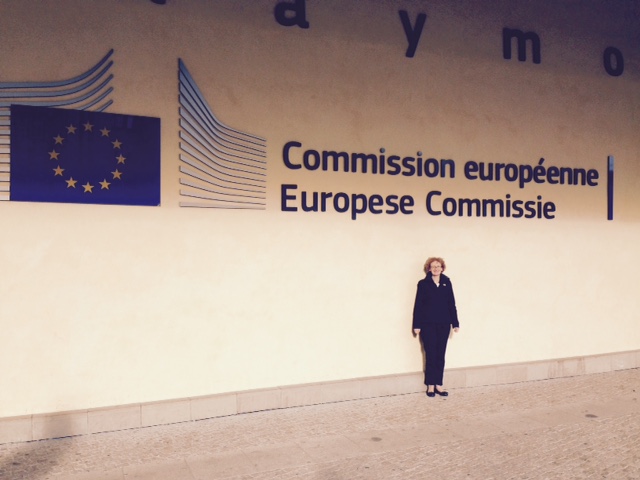
The C4C Manifesto launches in Brussels during the first C4C Annual General Meeting on 20-21 January 2015. EIFL will join other members of the coalition to plan, debate and advocate for the year ahead.
Read more
EIFL’s seven point plan to the European Commission
EIFL response to the 2014 European Commission public consultation on the review of the EU copyright rules.
EIFL response to the 2008 European Commission public consultation on copyright in the knowledge economy.
Teresa Hackett is Copyright and Libraries Programme Manager at EIFL (Electronic Information for Libraries).
SUMMARY OF THE COPYRIGHT FOR CREATIVITY MANIFESTO
Click here for the full Copyright for Creativity Manifesto.
Four Pillars to Modernize Copyright in the EU
The long-discussed Copyright review seems to gradually become a reality, as the Juncker Commission slowly rolls out its action plan to create a true digital single market for the EU, and as the European Parliament (EP) divulges its first findings on the matter through the publication of the draft Own-initiative Report on the evaluation of the Copyright Directive (2001/29/EC) by MEP Julia Reda on 19 January to the press, and on 20 January to the JURI Committee of the EP.
With a diversity of stakeholders ranging from consumer associations to industry, from digital rights activists to universities, research centers and libraries and from national organisations to European ones, C4C believes that we are well placed to identify what the key cornerstones of a copyright review should be, in order for it to fit the legitimate expectations of the 21st century and to act as a true catalyst for innovation and creativity.
Our Copyright Manifesto identifies four main flaws in the current system, and proposes manners in which to address them, namely:
1 |
The flaw: an outdated framework, based on a reality from 2001 that has long since changed | The solution: a Copyright review that simplifies and modernizes the rules to bring them into line with today’s reality and comprises a flexible norm to cope with future evolutions |
2 |
The flaw: a Directive that creates no harmonisation, hence weakening any attempt to truly distil a digital single market | The solution: a harmonization based on a mandatory list of limitations and exceptions, that enables both users and businesses to understand their rights and obligations across the EU |
3 |
The flaw: the duration of copyright protection is too long | The solution: a shortening of duration that does not extend beyond what international treaties require and a faster transfer to the public domain |
4 |
The flaw: a dysfunctional implementation and enforcement of the rules | The solution: a review of the implementation and enforcement, based on demonstrated harm and the rule of law, including an in-depth reassessment of private copy levies and the preservation of intermediary liability rules |
Copyright affects everyone in the EU, as evidenced by the massive number of responses to the Commission’s consultation. It is also perceived as being no longer fit-for-purpose by most stakeholders, except for those that benefit from the flaws of the current system.
The tag line of our manifesto is hence the best way of summarizing what the EU’s philosophy should be the next year(s): ‘Now is the time to Fix Copyright!’ This view certainly seems shared by MEP Julia Reda, in her balanced Report. Up to her colleagues and Commissioners Ansip and Oettinger to follow suit.