

At the World Trade Organization Public Forum last week, a panel explored opportunities for Africa in global and regional value chains. A certain level of development needs to be achieved so that countries can benefit from global value chains, speakers said.
The panel titled, “Global and regional value chains in Africa – determining strategic approaches to leverage new trade opportunities for the continent,” was organised by the Friedrich-Ebert-Stiftung, and the African, Caribbean and Pacific Group of States on 3 October, during the WTO Public Forum, held from 1-3 October.
Hubert Schillinger, director of the Friedrich-Ebert-Stiftung Geneva office, said that in the last 25 years global value chains have emerged and changed the landscape of trade. Today, companies divide their production activities across the world, he said, such as manufacture and assembly. The question is how Africa can use this opportunity and navigate the challenges born out of the global value chains, he asked.
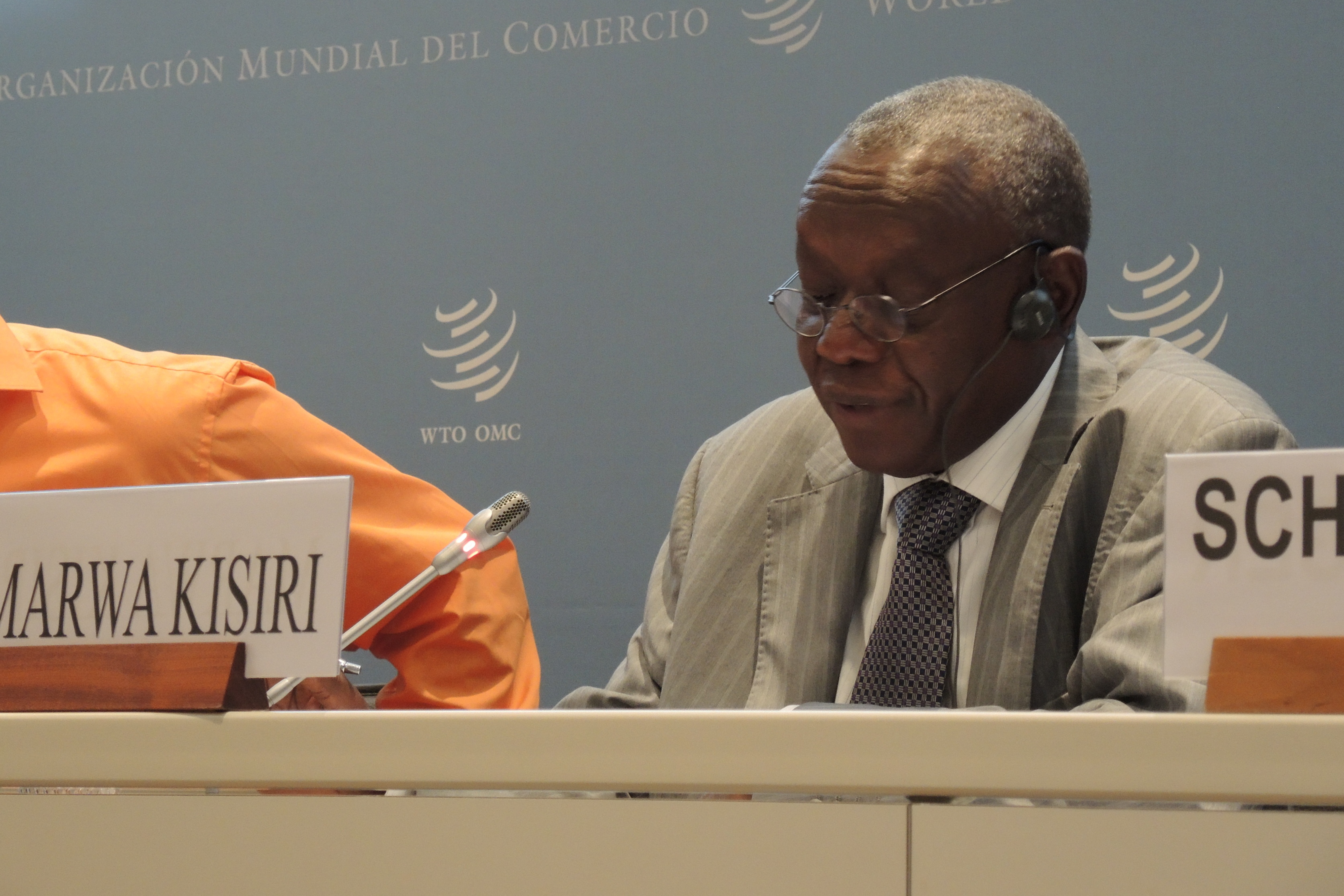
Ambassador Marwa Kisiri, for the African, Caribbean and Pacific Group of States, said global value chains are very important to harness development, but he also underlined regional value chains as essential, in particular in the South-South relationships.
For Susanne Fricke, economist at the Friedrich-Schiller-University, Jena, Germany, said in principle higher participation in the global value chain translates to higher gains but only under some preconditions. A certain level of development needs to be achieved, in particular in terms of technological capabilities, the ability to meet international standards, and the development of the service sector, she said.
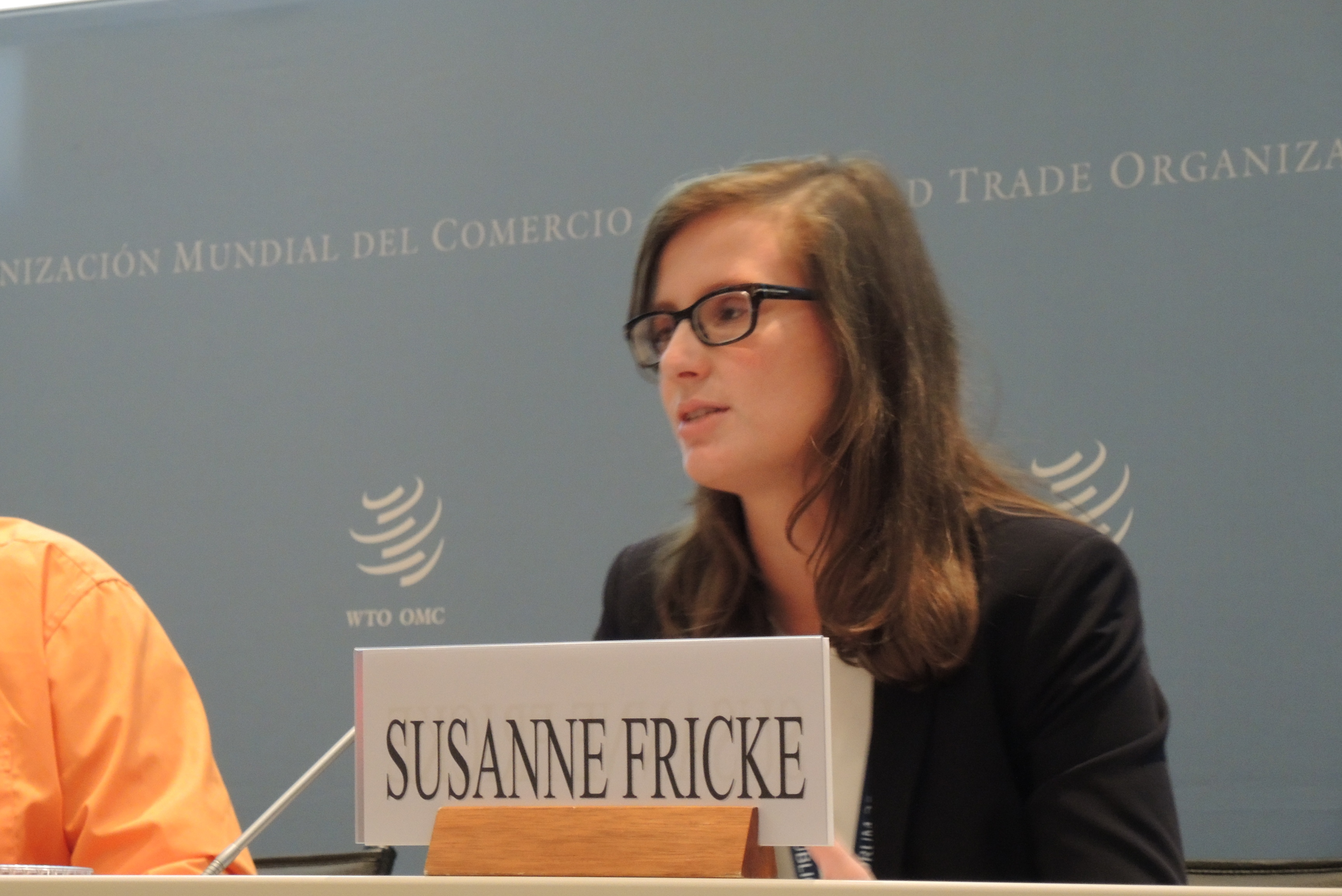
To ensure successful participation in global value chains, three basic aspects have to be insured, she explained. First, the presence of infrastructural networks and services; then the workforce development, including basic requirements of health and education; and finally an institutional environment providing the guarantee of property rights, the existence of the rule of law, and a low level of corruption.
“If a developing country starts to participate in global value chains, it normally starts to participate at the lower end of the chain, at production stages where the generated value-added is relatively low,” said Fricke.
In order to achieve far-reaching benefits for the whole society, upgrading processes is necessary, she added, so the country can reach higher production stages. The inability to meet the preconditions could confine the country “to the lower end of the chain,” she said.
For most African agricultural groups, the participation in value chains has been lacking, said Susan Bingi, independent consultant and partner at TRAC (Trade Capacity) Associates, Uganda. Value chains should include engagements by buyers and producers, but in this case, most producers work independently and then there are layers of intermediates connecting producers to buyers. “The gains definitely are almost not there,” she said.
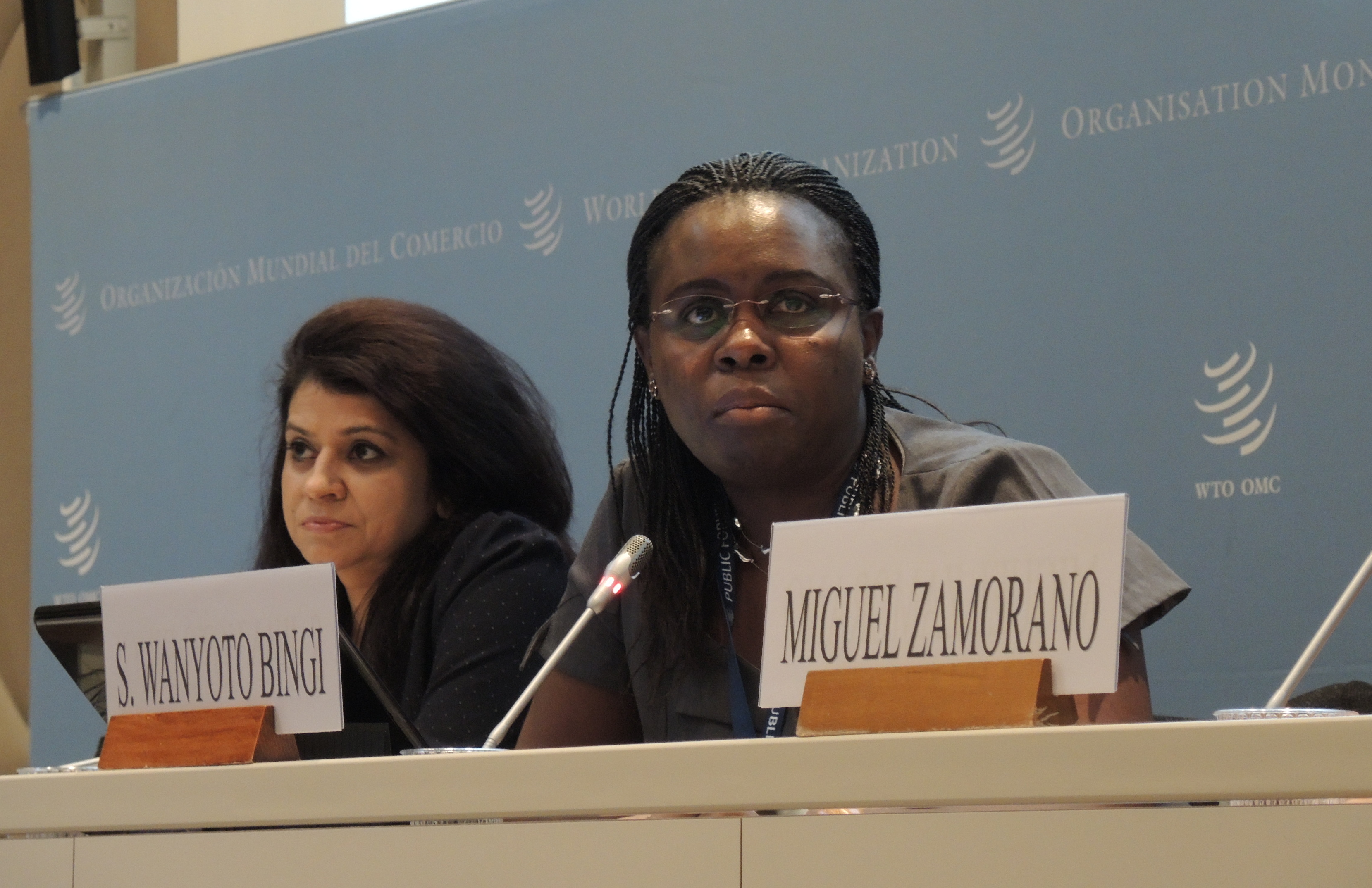
Classic examples are coffee and cotton, she explained, where a cooperative produces the coffee, the intermediary is an international organisation, which buys the coffee from the cooperative, and the destination of the coffee remains unknown to producers. In many cases, “the interface between suppliers and the market remains very weak,” she said, which prevents producers from analysing the market and negotiating prices.
A progressive approach should be taken, said Bingi, improving the capacity of producers to supply the domestic market, then the regional market and only then the global market.
Genzeb Akele, senior director, value chains, Agricultural Transformation Agency (ATA), Ethiopia, said the Ethiopian government designed an industrialisation policy, putting small holder farmers as the centre of the strategy.
One of the issues identified under a specific programme of this policy was weak coordination among the chain actors, she said. Bringing together the different actors, such as the private sector and service providers, to have fair value chain governance is essential, she said. Such a strategy was used in the production of local honey, and allowed the actors to identify critical bottlenecks, key interventions, and to decide on an agenda and on the repartition of responsibilities. Ethiopia is now exporting honey to the European Union and Japan, she said.
Rashmi Banga, Unit of Economic Cooperation & Integration among Developing Countries at the United Nations Conference on Trade and Development (UNCTAD), said some 67 percent of the total value created from global value chains goes to Organisation for Economic Cooperation and Development (OECD) countries. She was citing an OECD-WTO Trade in Value Added (TiVA) database released in 2013.
About 12 percent goes to the BRICS (Brazil, Russia, India, China, South Africa) countries and Southeast Asian countries, and only 8 percent goes to all least-developed and all other developing countries.
The share of sub-Saharan Africa in global trade has increased but in global GDP it is still the same as it was in the 1970s – Rashmi Banga
The share of sub-Saharan Africa in global trade has increased but “in global GDP it is still the same as it was in the 1970s,” she said. Taking advantage of global value chains requires a set of preconditions that sub-Saharan countries might not have met yet, she said.
Intellectual Property in Global Value Chains
Answering a question on the relevance of intellectual property rights in value chains, such as geographical indications and trademarks, Banga said, “geographical indications is something that really needs to be explored in global value chains. It has a lot of potential to increase the value that small farmers and SMEs [small-and medium-sized enterprises] can get out of value chains.”
However, “geographical indications have not really filtered into the concept of global value chains.” If the value chain is based on a product that has a geographical indication, “I think it would be easier to have regional branding, which can increase the value small producers can get,” she said.
Image Credits: Catherine Saez