

 Hours after the adoption of the World Intellectual Property Organization Marrakesh treaty expected to facilitate access to special format books for visually impaired people, a range of stakeholders gathered for a stocktaking exercise on the treaty.
The text of the “Marrakesh Treaty to Facilitate Access to Published Works for Persons who are Blind, Visually Impaired, or otherwise Print Disabled” is available here.
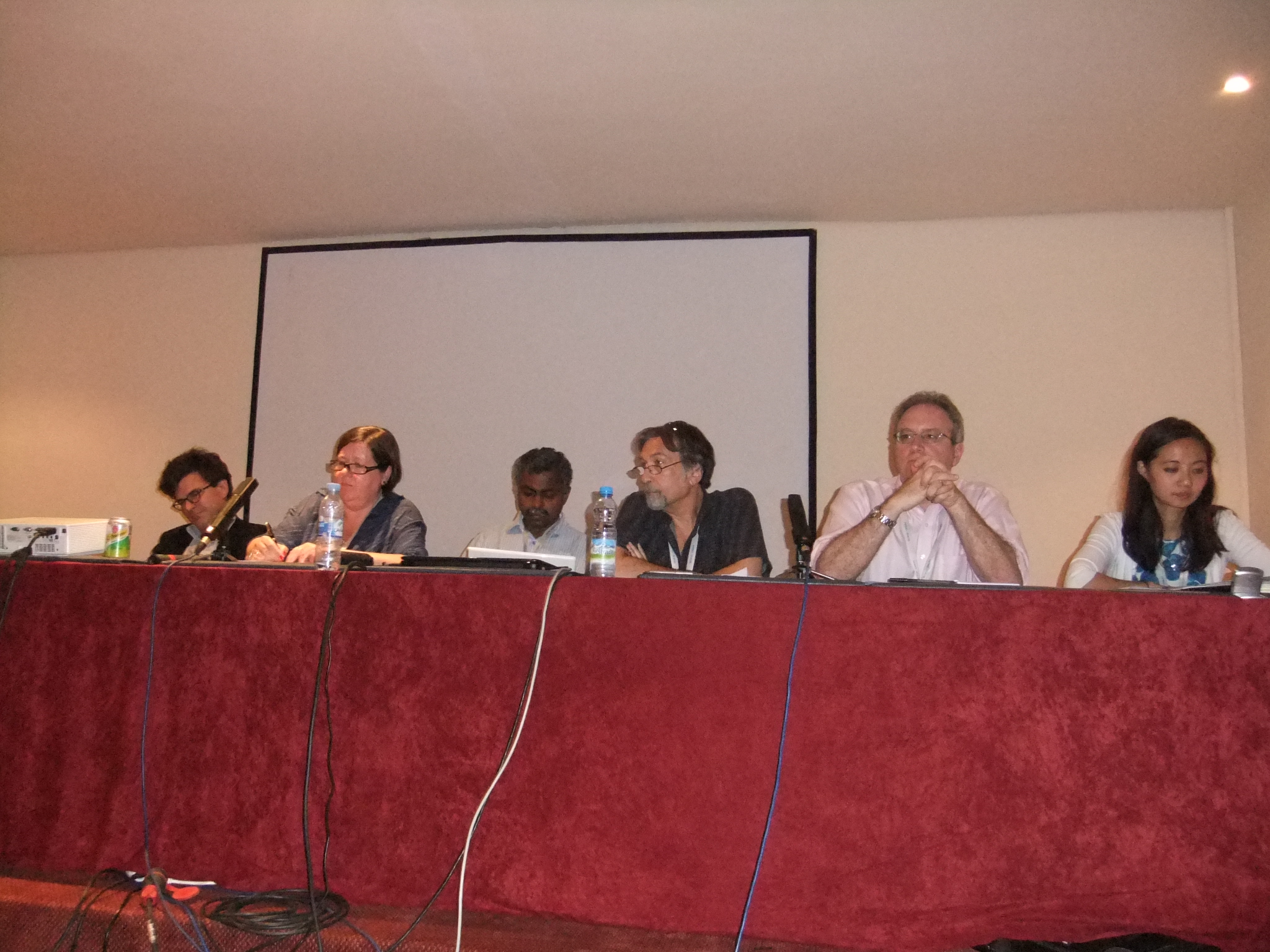
Knowledge Ecology International (KEI), a leading proponent of the treaty since the start, organised a side event on 27 June, convening representatives of civil society, academia and the publishing industry to reflect on the adoption of the treaty.
The side event was moderated by Ellen ‘t Hoen, former director of the Medicines Patent Pool, volunteering for KEI during the Marrakesh negotiations.
Krista Cox, staff attorney for KEI, said this is an amazing moment in history. The treaty, she said, is a good one, as it is clear and has a number of very positive things in it, such as the clause on technological protection measures. The definition of authorised entities is broadly framed and the inclusion of fair use and fair dealing is the first occurrence in an international treaty and creates a lot of flexibility to implement the treaty, she said.
The treaty also has respect for national law and preserves the flexibility and rights of member states to implement this treaty, taking into consideration the domestic context, she said.
Alan Adler, general counsel and vice-president for government affairs at the Association of American Publishers (AAP), said this is an exceptional treaty, dealing with issues which resonate with human rights.
The treaty also has significance for American publishers, as the core concept of the treaty is based on an exception that the AAP worked with the National Federation of the Blind to enact in US Copyright Act 17 years ago with no treaty obligating it, he said. In that act, known as the Chafee amendment, the notion of authorised entity is key, he said.
Some think that the Chafee amendment being 17 years old and having been enacted before the digital environment is a little worn, Adler said. In that context, the notion that a key concept of a provision of US law would be used as a basis for creating an international treaty “gave us some concerns,” he said.
Publishers are moving towards publishing works in digital formats, available to download online and there was a great deal of concern in particular over the elements on how cross-border exchange would work, he said. That is why the publishing community pushed to have appropriate safeguards based to a large extent on the established framework of international copyright agreements.
“But that was an exceptional treaty and we did understand and participated “in helping to work out some carefully crafted compromises in the particular context of this treaty, he said. There is concern, however, “about how people will look at those compromises when they try to extend them to other contexts … where we may not have the same considerations,” he said, “but those questions are for the future.”
For K.M. Gopakumar, legal adviser for the Third World Network, there is no doubt that it is an historic achievement. Its importance goes beyond its legal achievement; it has a political importance, he said. The treaty “brings some kind of credibility to the IP framework,” he said, as for the first time it addresses the concerns of people.
It also has implications for WIPO as an institution, which was in credibility deficit, he said. “We can repeat the same spirit of flexibility and shared concerns to address other areas,” such as medicine or sustainable energy, he said. Gopakumar two issues remained about the treaty. The first one concerns the way in which countries will implement the treaty and whether they will take the “Marrakesh spirit” or create some more technical barriers. The second, he said, is the lack of a technical assistance component in the treaty.
Jens Bammel, secretary general of the International Publishers Association, said, “We absolutely welcome this treaty. We are glad that it happened.” He also regretted the absence of capacity building and technical assistance in the treaty. He said capacity building is important, in particular for local publishers, and that was a missed opportunity.
The arguments from “different sides at WIPO have not changed over the past 10 years,” he said, “while the world around us has changed dramatically.” WIPO has to find a way to develop processes that take into account the changes in the world and take the reality into account and the fact that that reality is not fixed, he said.
Jonathan Band, counsel to the Library Copyright Alliance, said that in many ways “we live in an age of anxiety.” Publishers and other rights holders are anxious about infringement, authorised entities are anxious about carrying out activities that might subject them to lawsuits, there is anxiety about treaties.”
In this treaty, he said, there are 10 indirect or direct references to the three-step test, which also reflects anxiety, he said adding he hoped that the Marrakesh treaty will help dispel anxiety.
Dan Pescod, for the World Blind Union, said the WBU is delighted to have a treaty. However, he said, WBU did not come to WIPO to get a treaty per se, but to solve an important problem linked to copyright law. It was not an ideological standpoint about copyright, he said. The treaty will not solve all the problems, but it was a legal blockage that needed to be removed.
Other Statements of Support
Industry and civil society groups and libraries this week issued statements of support for the completion of the treaty.
The Motion Picture Association of America (MPAA) and the National Federation for the Blind (NFB), which jointly had called for completion of a focussed treaty, praised the outcome in a joint statement [pdf]. MPAA had been cited as one of the industry groups raising significant concerns about the treaty during the negotiations.
“Our goal from the outset has been to improve this access and address the severe shortage of materials available to this community,” MPAA Chairman and CEO Chris Dodd said in the joint statement. “Working collectively, and with goodwill, we have created a vehicle that will serve a meaningful and important purpose for many years to come.”
“This historic treaty, the first-ever international instrument specifically addressing the needs of the world’s blind, will dramatically increase access to published works and the empowering information and ideas that they contain by a community that has traditionally experienced barriers to obtaining the world’s knowledge,” said NFB President Marc Maurer.
The Computer and Communications Industry Association (CCIA) said in its statement, “This is critical to the visually impaired, but it also helps copyright stakeholders from musicians to distributors to fans, as it demonstrates that International copyright can respond when markets fail and ensure access to knowledge.”
Electronic Information For Libraries (EIFL) said in its closing statement to the Marrakesh meeting, “This is not the end of a process, but the start of an era – an era of hope that the blight of the book famine may finally be coming to an end.”
And KEI also issued a laudatory statement about the outcome.