Original news and analysis on international IP policy
WHO, Gates, Industry And NGO Leaders Elevate Attention To Neglected Diseases
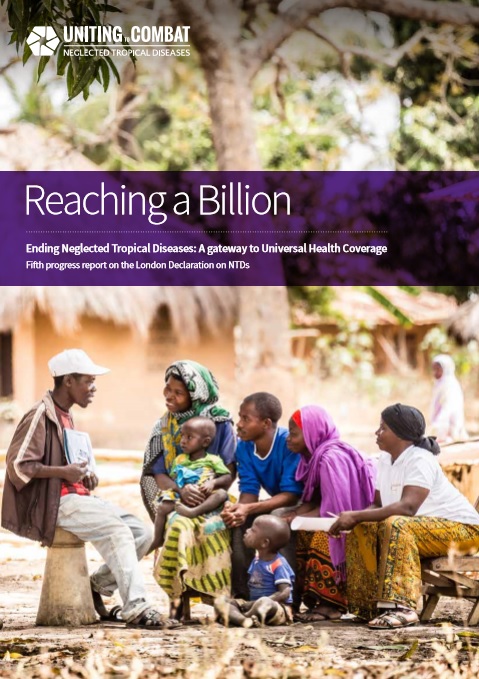
A range of some of the world’s top public and private partners in public health today announced an “unprecedented” level of cooperation to fight diseases primarily afflicting poorest populations worldwide for which there is insufficient research and development and inadequate health systems. But how the initiative will tie in with governments’ efforts at the World Health Organization to craft a global framework to address these issues remains to be seen.
A range of some of the world’s top public and private partners in public health today announced an “unprecedented” level of cooperation to fight diseases primarily afflicting poorest populations worldwide for which there is insufficient research and development and are inadequate health systems. But how the initiative will tie in with governments’ efforts at the World Health Organization to craft a global framework to address these issues remains to be seen.
“This new partnership is unprecedented,” WHO Director General Margaret Chan told the gathering. The event, entitled Uniting to Combat Neglected Tropical Diseases, took place in London. This is the “most coordinated” effort she has seen in her years working in public health, she said, adding to the group: “are you prepared to be coordinated?”
Announcements included to sustain or expand existing drug donation programmes through 2020, share expertise and compounds to accelerate R&D for new drugs, and provide more than US$ 785 million in support of R&D, drug distribution and implementation, according to materials. Some observers wondered whether all of the announcements are new or simply being discussed cooperatively. Proponents said progress toward commitments will be monitored.
An example of announcements was the UK Department for International Development saying it would increase aid for treatments by five times for treatments until 2015, and Merck’s expansion of a drug donation programme for pre-school children, from 25 million to 250 million doses.
Former Microsoft magnate Bill Gates called the event a “milestone, and said as the decade passes perhaps some may ask whether “neglected tropical diseases” should just be referred to as tropical diseases, and that investing in fighting these diseases holds “huge value for the money.”
The Drugs for Neglected Diseases initiative (DNDi) called today’s event “the largest coordinated effort to date to combat NTDs [neglected tropical diseases].” But it also said that “while continuing to provide existing medicines for NTDs, parallel and greatly enhanced R&D initiatives for new drugs and diagnostics are necessary for disease control or elimination.” DNDi Executive Director Bernard Pécoul said diversified, sustainable funding is needed, with additional donors and a new mechanism for R&D funding as emerging at the WHO.
Diseases being targeted in the cooperation today include: Guinea worm (expected eradication), lymphatic filariasis, blinding trachoma, sleeping sickness and leprosy, soil-transmitted helminthes, schistosomiasis, river blindness, Chagas and visceral leishmaniasis.
Chan announced the release today of a WHO “roadmap for implementation” of strategies to either eradicate certain diseases, eliminate them in some countries or get control of others. The roadmap breaks down efforts across countries and identifies what is needed, included costs and benefits.
Among the many issues and recommendations made in the 42-page roadmap, WHO mentions as an action with immediate effect to: “Convene sessions with representatives of governments and partners to develop a framework for transition strategies, thereby enabling governments to sustain control achievements during the gradual withdrawal of partners.”
The International Federation of Pharmaceutical Manufacturers and Associations (IFPMA) announced that the industry jointly pledged a further 14 billion treatments for these diseases. “This is our commitment as partners to help end NTDs and improve patient health,” IFPMA director-general Eduardo Pisani said in a statement.
IFPMA said that at least one billion people worldwide – one person in seven – suffer from NTDs, and that they kill millions of poor people primarily in tropical and subtropical areas. The research-based industry is not only making medicine donations, but also helping with capacity-building and medical innovation, it said.
This includes the recently launched UN World Intellectual Property Organization Re:Search project, under which companies have agreed to share their propriety clinical trial data and knowledge for use in R&D on these diseases in least-developed country markets. Sanofi CEO Christopher Viehbacher mentioned the Re:Search project at today’s event.
Bayer HealthCare Board Chairman Jörg Reinhardt said R&D for neglected diseases is risky and expensive, and that companies are working together to find new formulations as well as new drugs, including now sharing their libraries of compounds, in what he called an “unprecedented initiative on the part of industry.”
Speakers today included Chan, Gates, officials from the UK, United States, Tanzania, Mozambique, Bangladesh, Brazil, and executives from GlaxoSmithKline, Merck, Eisai, Johnson & Johnson, Sanofi, Gilead, Novartis, and Bayer. Other organisations speaking included DNDi, and the World Bank.
Boost to WHO Expert Group on R&D Financing and Coordination?
It is not entirely clear how today’s announcements will affect an initiative directed by WHO member states to find sustainable financing models for neglected diseases R&D. Today’s announcements were linked to longer term efforts but many were finite in their timeline and depended on the goodwill and participation of the private sector.
The WHO Consultative Expert Working Group on R&D: Financing and Coordination (CEWG) http://www.who.int/phi/news/cewg_2011/en/index.html at its most recent meeting in November, announced that it expects to recommend to the May World Health Assembly the negotiation of a binding instrument (IPW, WHO, 14 December 2011).
The CEWG final report is due out in the next month or so, and may be followed by information sessions leading up the May Assembly, according to sources. There could be a decision to have a resolution, one source said. The CEWG grew out of larger effort by WHO members to address the issues in a global strategy and plan of action, which it adopted in 2008.
The 16-23 January WHO Executive Board took note of a progress report on the Global Strategy and Plan of Action (EB130/35) [pdf], as well as the November report of the CEWG (document EB130/23) [pdf]. There was discussion about delaying action on the CEWG report but this was dismissed, according to observers.
DNDi in its release identified four key elements necessary to support the WHO NTD roadmap goals by 2020. They are: to boost innovation and promote more open sharing of research knowledge; forging public-private partnerships for drug development; ensuring endemic country involvement and leadership; and attaining sustainable and diversified funding for R&D.
Under this last item, the group lists key financial commitments from governments and foundations like Gates, but also the need for new incentives such as several listed in the CEWG report from November. This includes prizes, and a financial transaction tax for health.
DNDi’s Pécoul told Intellectual Property Watch afterward that the CEWG is a point for discussion on the agenda of the next World Health Assembly. “It is still on the table as a main issue of the WHA,” he said.
Pécoul said that all of the activity highlighted today “should be connected” to the framework of R&D at the WHO. What is needed, he said, is sustainable funding and an innovative model, and the open source model is part of that. And if companies are offering products and compound libraries to be shared, that is the same as open source, he said.
Pécoul added that today’s announcements could be a contribution to the government efforts, in which “governments have a huge responsibility to set up the rules of the game.”
A request to the WHO for information about how today’s events relate to the ongoing CEWG effort could not be answered by press time.
Médicins Sans Frontères (MSF, Doctors without Borders) issued a statement today saying that “in the midst of all the positivity MSF wishes to highlight what is still missing if deadly neglected diseases are truly to be eliminated.”
“For sleeping sickness, a major neglected tropical disease, to be eliminated, enhanced R&D and programmatic support along with access to current drugs are necessary. The actors at the London conference are only offering the latter,” MSF said. “Therefore, MSF is calling on actors at Monday’s meeting to devote attention to all of these elements in order to end immense suffering at the hands of diseases like sleeping sickness, and add credibility to the promise of eliminating the targeted tropical diseases.”
This particularly means not just drug donations but support for national policies, MSF said. “All the talk about ambitious goals and elimination will not make a difference unless we put our full support behind national control programmes and national health systems in countries where the disease is endemic,” said Dr Andreas Lindner, a member of MSF’s inter-regional mobile sleeping sickness team.
Data on funding for neglected diseases is available at G-FINDER (Global Funding of Innovation for Neglected Diseases).
Another laudable initiative from WHO, but will it deliver? WHO has played a rather churlish game when it comes to the 10/90 gap – that serious misallocation of health R&D – but will not challenge the market based intellectual property rights system. The market system is always correct! Even the Global Strategy and Plan of Action was negotiated while WHO officials sought to marginalise the importance of the process by even limiting the scope of diseases that it was supposed to cover at its own initiate! Why is it groups like DNDi are more effective than WHOs TDR (which has done good work, but why not more)? Is this not an indictment on collective action? While the Global Strategy talks were underway, WHO was pushing another initiative (Bamako) instead of consolidating its programmes, it seems like fragmentation on issues that are sensitive to IPR rights holders ok, but in all others please ‘Deliver as One’ (the UN reform mantra). And why were WHO officials content to let the discussions on the Global Strategy be held behind closed doors like they do at the WTO? Is WHO really commited to transparency ? It will be interesting to see the transparency of these initiatives…



Another laudable initiative from WHO, but will it deliver? WHO has played a rather churlish game when it comes to the 10/90 gap – that serious misallocation of health R&D – but will not challenge the market based intellectual property rights system. The market system is always correct! Even the Global Strategy and Plan of Action was negotiated while WHO officials sought to marginalise the importance of the process by even limiting the scope of diseases that it was supposed to cover at its own initiate! Why is it groups like DNDi are more effective than WHOs TDR (which has done good work, but why not more)? Is this not an indictment on collective action? While the Global Strategy talks were underway, WHO was pushing another initiative (Bamako) instead of consolidating its programmes, it seems like fragmentation on issues that are sensitive to IPR rights holders ok, but in all others please ‘Deliver as One’ (the UN reform mantra). And why were WHO officials content to let the discussions on the Global Strategy be held behind closed doors like they do at the WTO? Is WHO really commited to transparency ? It will be interesting to see the transparency of these initiatives…