

In low- and middle-income countries, about 4 million HIV-infected people are receiving the specified antiretroviral drugs (ARVs), while 5 million are still in need. Sub-Saharan Africa accounts for three-quarters of these figures. Are there reasonable signals from trade rules and policy directions by governments and leading institutions that this scenario might rapidly improve? Daniele Dionisio argues some perspectives might favourably change now that controversial rules and practices by World Trade Organization, World Bank and International Monetary Fund are increasingly under pressure, and that new government policy choices and actors on the world chessboard are emerging.
In low- and middle-income countries, about 4 million HIV-infected people are receiving the specified antiretroviral drugs (ARVs), while 5 million are still in need. Sub-Saharan Africa accounts for three-quarters of these figures [1].
Are there reasonable signals from trade rules and policy directions by governments and leading institutions that this scenario might rapidly improve? Terms of improvement should include, of course, not only the legal and financial obstacles influencing countries’ ability to secure the medicines, but the factors conditioning manufacturers’ (public and private) incentives to supply appropriate streams of reliable drugs [2,3].
Actually, some perspectives might favourably change now that controversial rules and practices by World Trade Organization, World Bank and International Monetary Fund are increasingly under pressure, and that new government policy choices and actors on world chessboard are emerging [3-6] .
These include (though are not limited to) unprecedented openings to Indian generics (through the US Food and Drug Administration channel) by the US President’s Emergency Plan for AIDS Relief-PEPFAR, the UNITAID and World Health Organization-WHO (still uncertain, though keen) campaign towards the adoption of patent pool strategies for second and third line newer ARV [antiretroviral] fixed-dose combinations and formulations for adults and children, the fast-growing ARVs bulk purchasing activities with the generic producers led by the Global Fund for AIDS/TB/Malaria and the Clinton Foundation-UNITAID coalition [7, 8].
Again, these include the ongoing work of the Expert Working Group established by WHO’s 61st World Health Assembly (May 2008) to examine innovative sources of funding (among others, product development partnerships, prizes, advance market commitments, patent buy-outs, priority review vouchers, health impact fund) to stimulate research & development (R&D) related to diseases that disproportionately affect the developing world (http://www.who.int/phi/ewg/en/index.html), while disconnecting the R&D costs from the product end prices [9].
New perspectives, albeit at present with hardly predictable balances/results, can also arise from:
- weakening US appeal over Southeast Asia, South America and Africa due to strong competitors such as China, India, and Russia.
- weakening US influence over international chessboard.
- rising European Union reliability through improved member governments alignment in patent-related issues [10].
New perspectives, again, could come from the fast pace of South-South and North-South cooperation. South industry high-level skills in innovation, manufacturing and marketing do entwine currently with steadily enhancing both South-South cooperation examples and outsourcing models in North-South R&D joint ventures. Multinational pharma companies are striking, indeed, more and more deals with Chinese and Indian drug researchers to outsource testing for drug candidates and replenish drug development pipelines, while accelerating, thanks to the efficiency of Eastern laboratories, a development process and saving billions of dollars in costs (in India, five PhD chemists can be employed for the cost of one in the West).
Concurrently, Eastern researchers are benefiting through profit shares and intellectual property rights, while being aware that these collaborations will spur new breakthroughs in medical research and develop a local industry originally built on mere generic drugs [3].
Taken together, these realities mean that peer trade competition between wealthy and middle income countries is already round the corner. In this context, for-equity gains in life-saving drug access should hopefully be achieved shortly, as a result of the overall dynamics, entwined interests and competition above.
- Towards universal access: September 2009 WHO progress report. (accessed 14 October 2009)
- Dionisio D, Gass R, McDermott P, Racalbuto V, Madeo M, Braghieri G, Crowley S, Pinheiro E, Graaff P, Vasan A, Eksaengsri A, Moller H, Khanna AK, Kraisintu K, Juneja S, Nicolaou S, Sengupta A, Esperti F, Messeri D (2007). What strategies to boost production of affordable fixed-dose antiretroviral drug combinations for children in the developing world? Current HIV Research 5: 155-187
- Dionisio D, Fabbri C, Messeri D. (2008). HIV drug policies and South markets: settling controversies. Therapy 5: 707-717.
- World Trade Organisation (2005). Overview: the TRIPS Agreement (accessed November 5th, 2009).
- Stuckler D., King LP, Basu S. International Monetary Fund programs and tuberculosis outcomes in post-communist countries. PLoS Medicine, July 2008; vol.5, issue 7; e143.
- Korir JK, Kioko U. Evidence of the impact of IMF fiscal and monetary policies on the capacity to address the HIV/AIDS and TB crises in Kenia. June 2009 [pdf]
- ‘t Hoen E, von Schoen-Angerer T. A Patent Pool for Medicines. TheWorldToday.org 2009 :30-1. (accessed April 2009)
- UNITAID and the Clinton HIV/AIDS Initiative announce new price reductions for key AIDS medicines (UNITAID Report, 17 April 2009).
- Sixty-first World Health Assembly 24 May 2008: Global strategy and plan of action on public health, innovation and intellectual property [pdf].
- STOA Conference on “Current Policy Issues in the Governance of the European Patent System,” 17 March 2009, European Parliament, Brussels, Belgium.
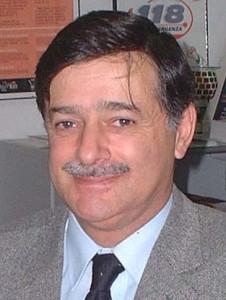 Daniele Dionisio
Coordinator, “Access to Drugs: International Policies” – CLIA (Italian Network for International Fight against AIDS).
Advisor, “Availability of Drugs in the Developing Countries”, Italian Society for Infectious and Tropical Diseases (SIMIT).
Director, Division of Infectious Diseases, Pistoia Hospital, Pistoia, Italy